
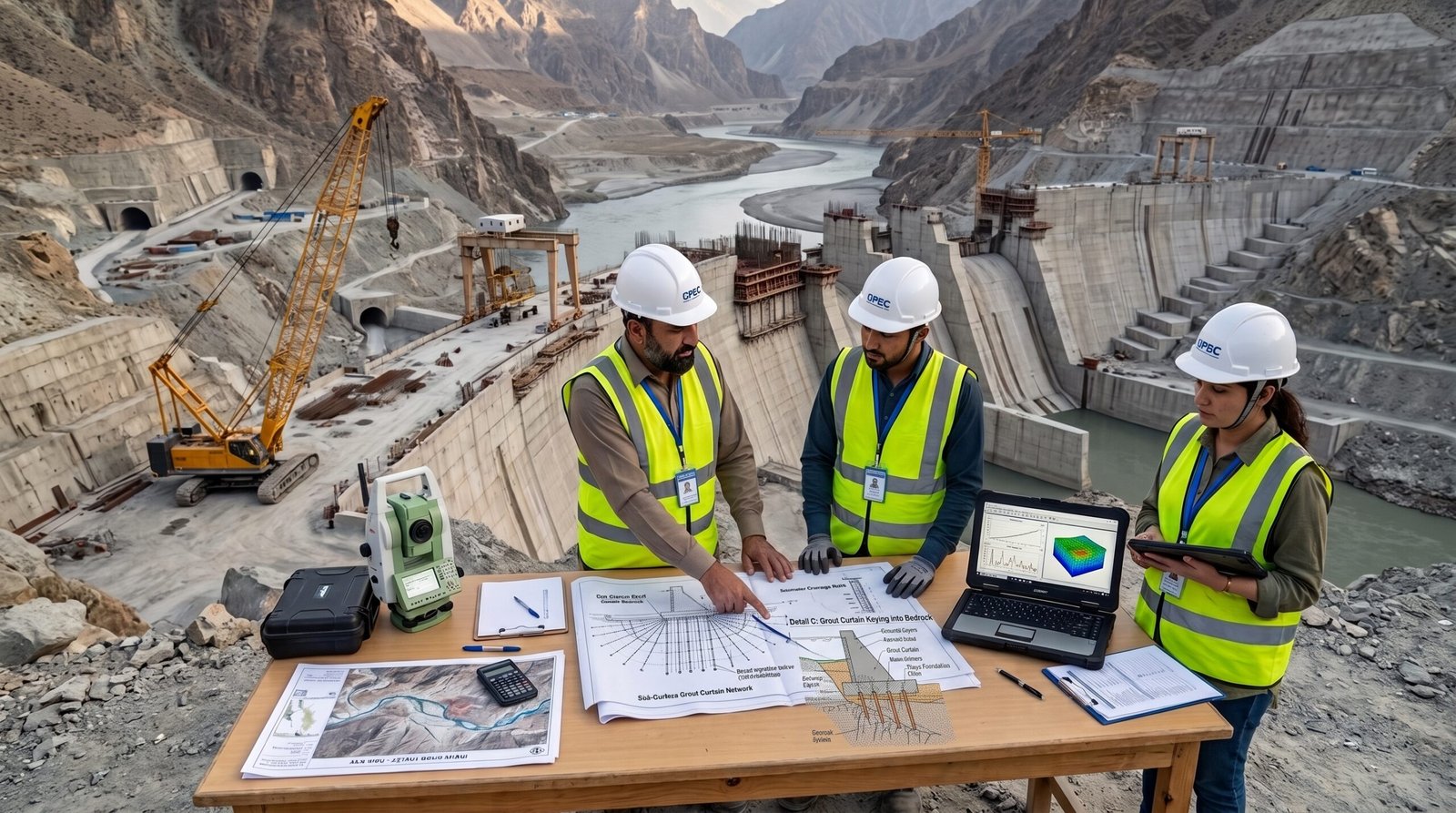
Every few years, a new dam project makes headlines in Pakistan. There’s a groundbreaking ceremony, a hopeful speech about ending load-shedding or securing water for the next generation, and then… years go by. Costs balloon. Timelines slip. Sometimes the project stalls entirely, and the site sits half-built while the reasons everyone needed it in the first place — water shortages, flooding, energy gaps — only get worse.
If you’ve followed Pakistan’s infrastructure story for any length of time, this pattern probably feels familiar. And it’s not just bad luck or bad management, though those play a role too. A lot of it traces back to something far less dramatic than a groundbreaking ceremony: what happened, or didn’t happen, in the feasibility study stage, long before construction ever began.

Why This Isn't Just an Engineering Problem
Pakistan is one of the more water-stressed countries in the region, and that stress is only building. Our major reservoirs — Tarbela and Mangla — have been steadily losing storage capacity to sediment buildup for decades. Meanwhile, rainfall patterns are getting less predictable, glacial melt in the north is accelerating, and the floods of recent years showed just how exposed our infrastructure is when water arrives too fast, in the wrong place, at the wrong time.
Dams sit right at the center of both problems. Done well, they store water for the dry months, generate power without burning fuel, and give downstream communities a buffer against flooding. Done late — or done on a shaky technical foundation — they become expensive lessons instead of solutions.
That’s the real cost of delay. It’s not just the extra billions added to a budget line. It’s the years a country spends still exposed to the exact risks the dam was supposed to solve.
What Actually Causes These Delays
It’s easy to blame politics, funding gaps, or contractor disputes — and honestly, those are real factors. But if you look closely at a lot of stalled or over-budget dam projects, a surprising number of the problems trace back to something that should have been caught years earlier: an incomplete or rushed feasibility study.
Here’s what that looks like in practice. A site gets selected based on decent-but-not-thorough surveys. Construction begins. Then, partway through, engineers discover the underlying rock isn’t as stable as assumed, or the sediment load coming down the river is far higher than projected, or the seismic risk in the area needed a completely different design approach. Now the project has to pause, redesign, and in some cases, relocate parts of the structure entirely. Every one of those pauses costs money and time — and erodes public confidence a little more.
None of this is unique to Pakistan. It happens on infrastructure projects around the world. But in a country where water security is this urgent, the margin for this kind of rework is thinner than most places can afford.

What a Proper Feasibility Study Is Actually Checking For
This is the part that often gets skipped over in public conversation, because it’s not as visible as a construction site. A feasibility study isn’t a formality you complete to unlock funding — or at least, it shouldn’t be treated that way. Done properly, it’s the stage where almost every major risk on a dam project gets identified while it’s still cheap to fix.
A thorough feasibility and hydrological study typically digs into things like:
Sediment and hydrology. How much water actually flows through this river system across wet and dry years, and how much sediment does it carry? Underestimate this, and you end up with a reservoir that loses usable storage capacity far faster than planned — which is part of what’s already happening at some of our existing reservoirs.
Geotechnical conditions. What’s actually under the ground where the dam and its structures will sit? Soil and rock investigations catch problems like unstable foundations or seismic vulnerabilities before they turn into design failures mid-construction.
Environmental and social impact. Who and what gets displaced or affected downstream and upstream? This isn’t just a compliance checkbox — getting this wrong leads to the kind of community disputes and legal delays that have stalled major projects for years at a time.
Catchment area behavior. How does the surrounding watershed respond during extreme weather? This is especially critical given how much more volatile rainfall and glacial melt patterns have become.
Financial and technical viability. Does the numbers side actually hold up against realistic construction costs, not optimistic ones? A lot of budget overruns trace back to feasibility-stage cost estimates that were too conservative from the start.
When a study genuinely investigates all of this — not just enough to satisfy a checklist — it gives decision-makers something incredibly valuable: an honest picture of what they’re actually building, before the concrete gets poured.

Small Dams Deserve the Same Rigor as Mega-Projects
There’s a tendency to associate “feasibility study” with massive, headline-grabbing projects — the kind financed by international donors and covered in national news. But some of the most important water infrastructure in Pakistan isn’t a mega-dam at all. It’s the smaller earthfill and rockfill dams that serve specific districts, feed local irrigation networks, and support agricultural communities that don’t make the news.
These smaller projects matter just as much, arguably more, to the people who depend on them day to day. And they need the same level of hydrological and geotechnical scrutiny as the big ones — sometimes more, because smaller projects often have tighter budgets and less room to absorb a costly design correction partway through construction.
A well-executed small dam, backed by solid field investigation and honest cost estimation, can deliver reliable irrigation to hundreds of acres for decades. A poorly-scoped one becomes a maintenance headache or, worse, a safety risk.
The Human Side of Delay
It’s worth pausing on what a delayed dam actually means for the people waiting on it. It’s not an abstract line item. It’s a farming community still rationing irrigation water because the canal network tied to the project was never finished. It’s a district still vulnerable to seasonal flooding because the flood-control component of a larger scheme got deprioritized when the budget ran short. It’s households in areas still dependent on erratic power supply because a hydropower component is years behind schedule.
Delay doesn’t just cost money on a spreadsheet. It extends real hardship for real people, sometimes by years.
Getting It Right the First Time
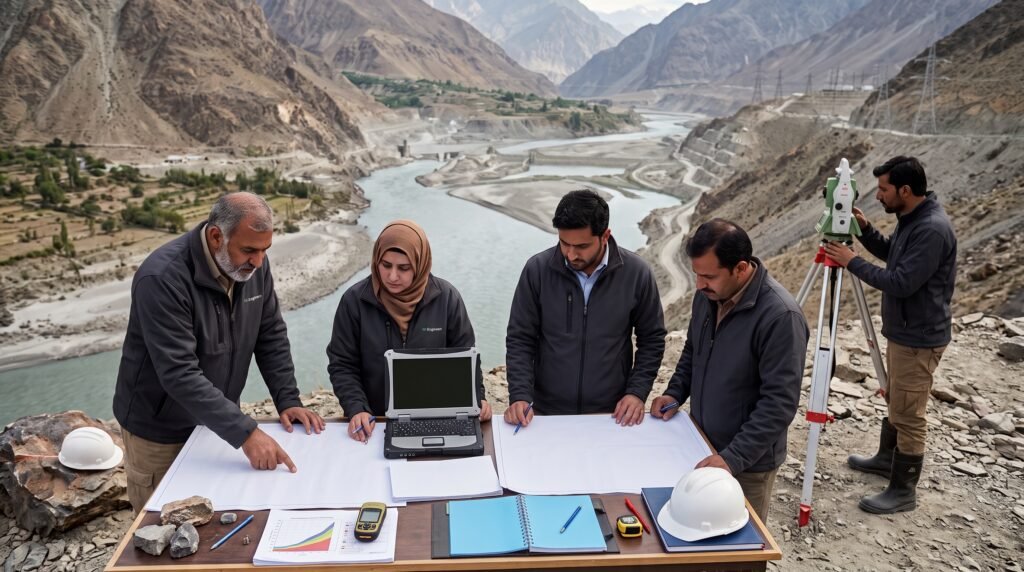
None of this is meant to suggest feasibility studies are some kind of silver bullet that eliminates every risk. Construction is complicated, and even well-planned projects run into surprises. But there’s a real, measurable difference between a project that hits an unexpected challenge and one that hits a challenge that should have been caught at the planning stage.
The firms and engineers doing feasibility work carry real responsibility here — not just to produce a report that satisfies a funding requirement, but to genuinely stress-test a project before it becomes a multi-year, multi-billion-rupee commitment. That means proper field investigation, honest hydrological modeling, and a willingness to flag hard truths early, even when they’re inconvenient for a project timeline.
At CIV Tech Associates, this is the stage of a project we take the most seriously — because we’ve seen, across more than three decades of dam and hydropower work in Khyber Pakhtunkhwa and beyond, how much a rigorous feasibility study can save a project from later. Whether it’s a small earthfill dam supporting a few hundred acres of irrigation or a larger hydropower scheme feeding into the national grid, the questions we ask before construction begins are the same ones that determine whether that project delivers on time — or becomes another delayed headline.
Pakistan doesn’t have the luxury of treating water infrastructure as optional or slow-walked. The floods, the droughts, and the growing demand for reliable power all point the same direction: we need these projects to work, and to work on schedule. That starts long before the first foundation is poured — it starts with asking the right questions, thoroughly, honestly, and early.